Barkley & Oates Inc.
8 Medical Centre, 33 Courtenay Street, George, South Africa
Phone: (+27) 044 873 3183 | Email: admin@barkleyoates.co.za
© Barkley & Oates Inc. | Website by https://www.colinstephenson.com

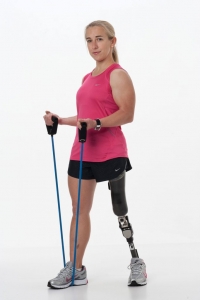
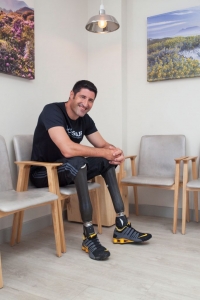
Prosthetics (pronounced prahs-THEH-tiks) is the branch of medicine that deals with the artificial replacement of a missing body part. A prosthesis (pronounced prahs-THEE-sis) is the general term for the artificial part itself that replaces the body part usually lost to disease or injury. Prosthetics has a long history, and recent design advances that use battery power and new lightweight composite materials are making prosthesis better and easier to use.
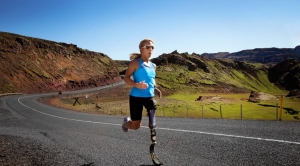
Lower limb.
Hemipelvictomy
Hip Disarticulation
Trans Femoral (Supra/ Transcondylar)
Knee Disarticulation
Trans Tibial
Symes
All foot amputations (Chopart, Lisfranc, Transmetatarsal, ect.)
Upper limb.
Forequarter
Shoulder Disarticulation
Trans Humeral
Elbow Disarticulation
Trans Radial
Wrist Disarticulation
Trans Metacarpal
Prosthetic Protocol
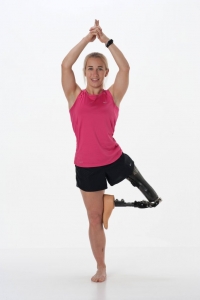
A Trans Tibial (TT) amputation, is one of the most common forms of amputation. In this amputation the leg is amputated below the knee (Through the tibia and fibula) leaving the patient with their own knee joint.
A Trans Femoral (TF) amputation, is the second most common amputation. In this amputation the leg is amputated through the Femur. It is Important to mention that a longer residual limb is with this amputation will be more beneficial to the patient.
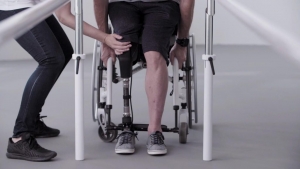
After the formalisation of the amputation, a compression dressing, rigid dressing, removable rigid dressing (Used in Trans Tibial Amputations) will be applied immediately after the amputation to prevent swelling of the residual limb tissues. Regulating the swelling of the residual limb is imperative as swelling of the soft tissues causes pain and can result in the suture site and stitches being put under undue tension.
Compression Therapy
After approximately 7 to 10 days, the wound dressing and rigid/ removable rigid dressing ( Used for TT Amputations) will be removed. Compression therapy of the residual limb can commence once the sutures have been removed. The compression therapy has the following advantages:
Assists in control of swelling
As a result of controlling the swelling, it helps to decrease pain
As a result of controlling swelling, it promotes wound healing
Reduces and shapes the residual limb for ideal for prosthetic fitting
As a result the rehabilitation process speeds up.
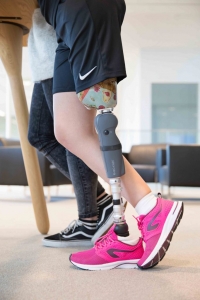
Compression therapy can be done by the use of elastic bandages wrapped around the residual limb, by the use of silicone compression liners or Stump Shrinkers. The silicone liners and shrinkers are easier to apply and give consistent graduated compression.
The compression therapy liners and shrinkers are applied in a graduated compression therapy protocol. As the residual limbs volume and shape reduces, a smaller size compression liner or shrinker will applied.
This process is recurring until the Prosthetist is satisfied that the volume and shape of the residual limb is stable for the casting and fitting of a diagnostic socket.
Casting, Manufacture and Fitting of Diagnostic (Trail) Prosthesis
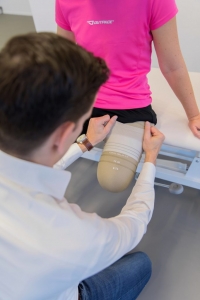
The diagnostic socket serves as a temporary prosthesis for short term use to help further shape and reduce the volume of the residual limb. The diagnostic socket also serves to identify and determine any socket fitting problems.
Fitting of Definitive Leg Prosthesis
Once the residual limb volume and shape has stabilised, the definitive prosthesis can be manufactured. The correct alignment of the diagnostic or trail prosthesis can be transferred to the definitive prosthesis.
Lower Limb Prosthetics Services
Upper Limb Prosthetics Services
For further info on medical devices click here to view Medical Technology.